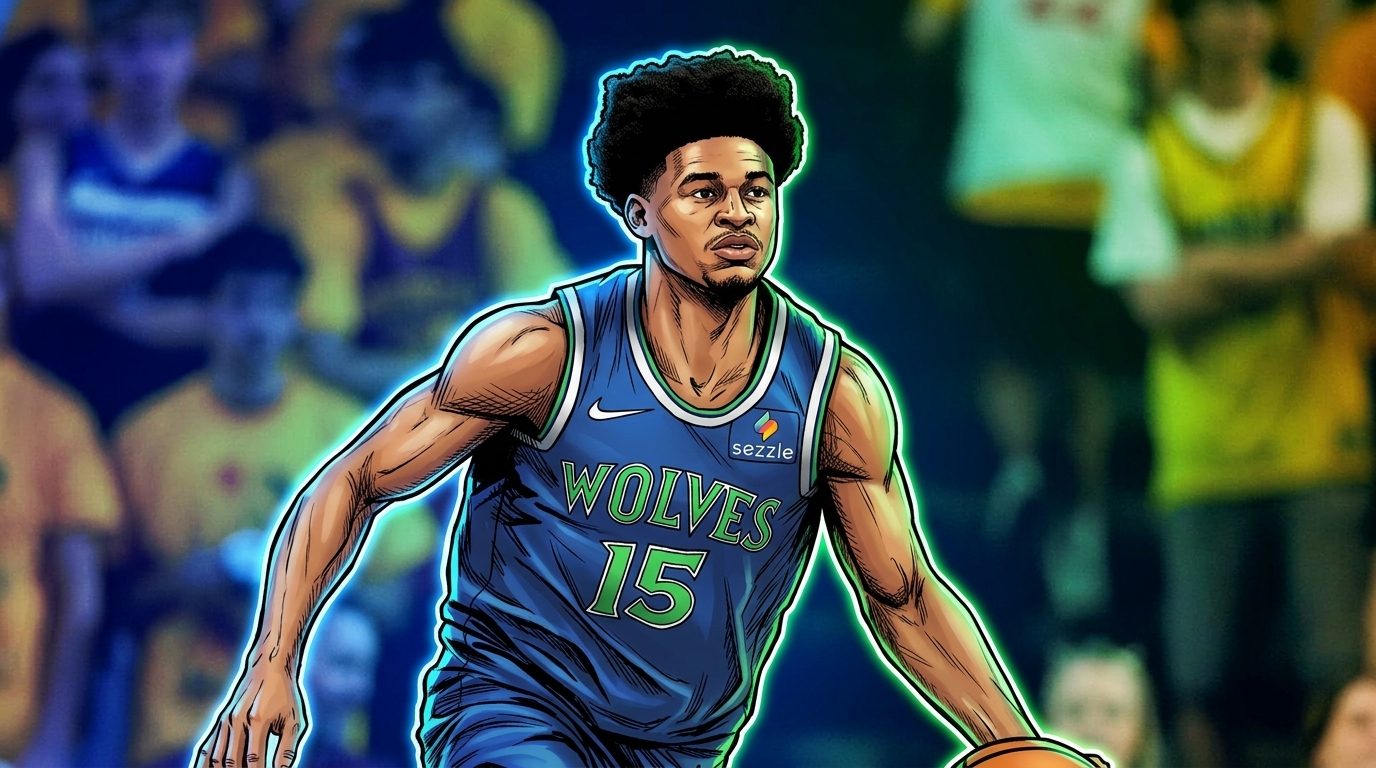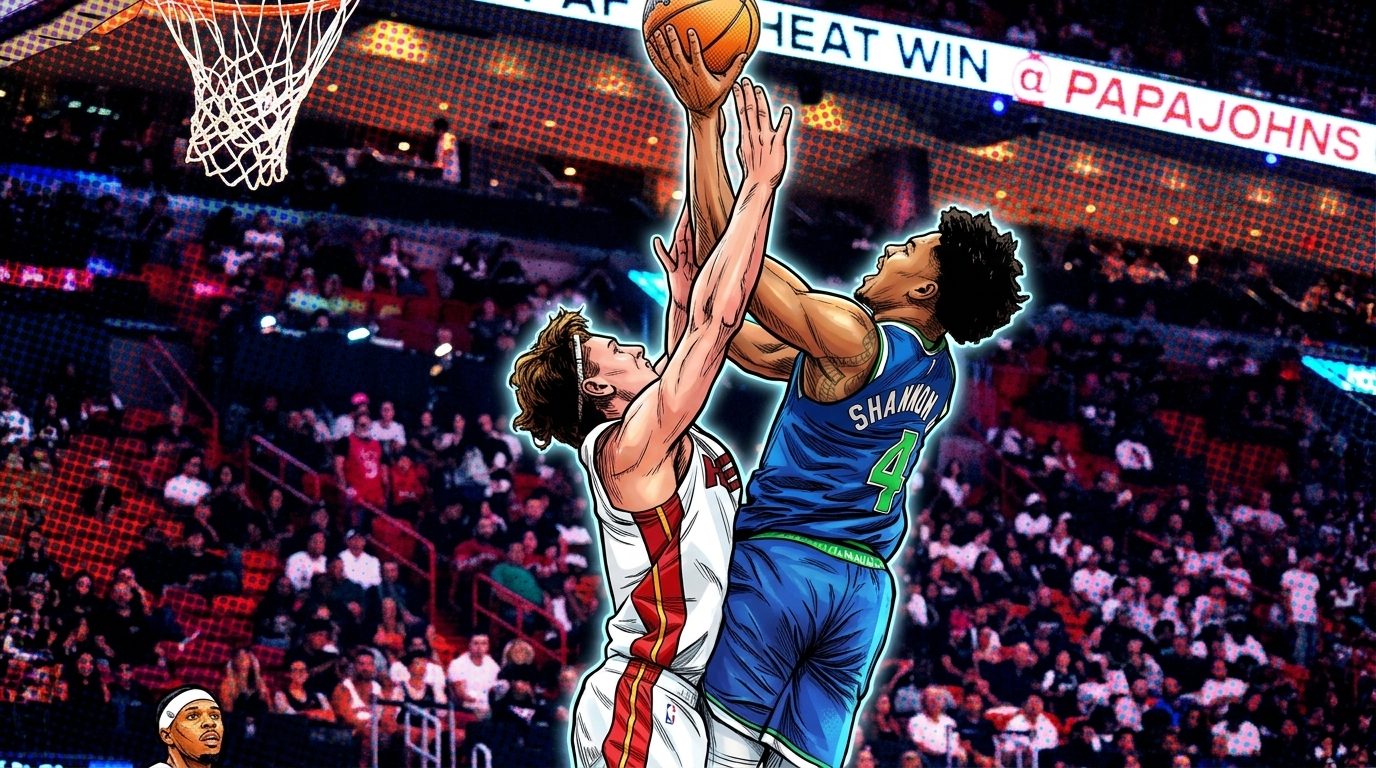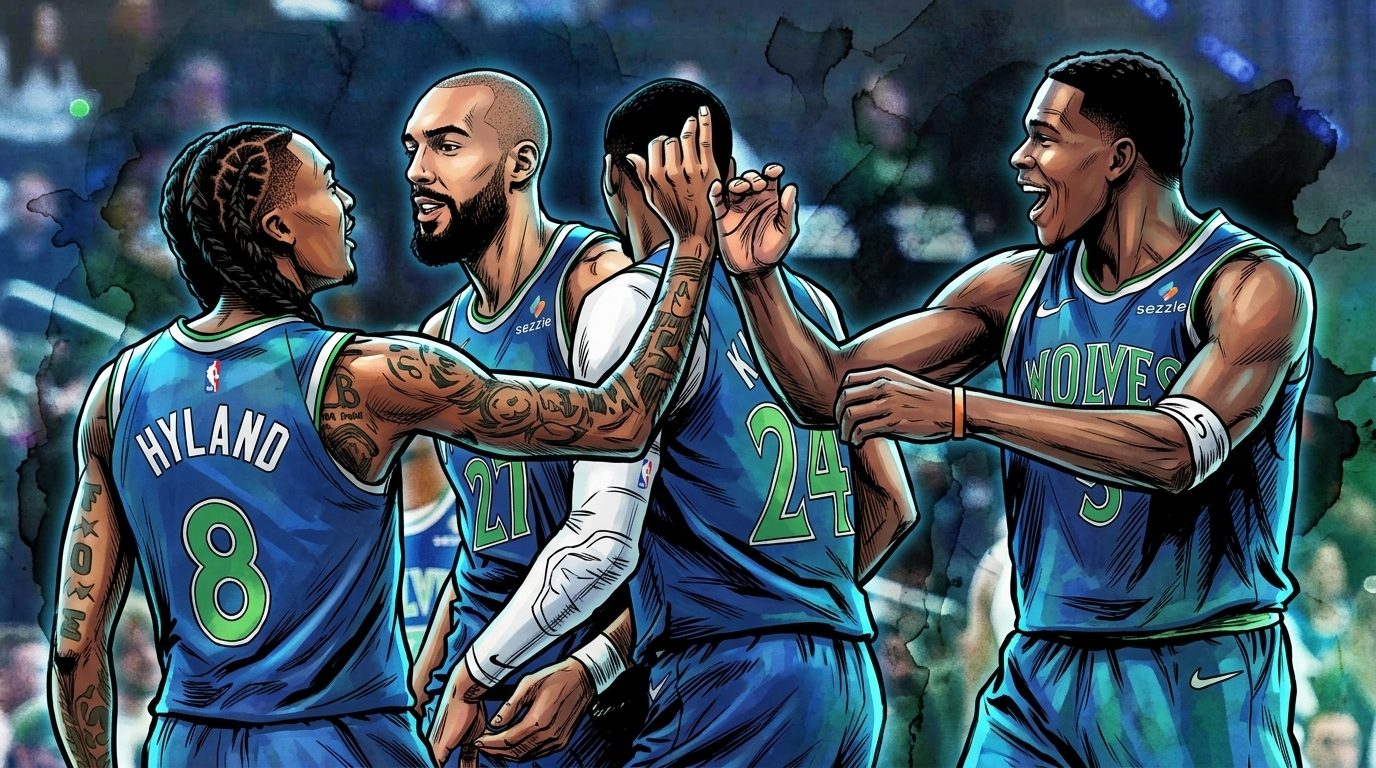

Jonathan Kuminga just walked away from roughly $23 million in Los Angeles to buy back one word in one clause, and that is the story here, not the dunks.
The Wolves have him. Two years, $12.4 million, with a player option on the second season, agent Aaron Turner to ESPN on Wednesday night, funded by the taxpayer mid-level exception. Los Angeles had a three-year sign-and-trade at $12 million-plus annually on the table with a comparable starting job attached to it. Chicago and Portland made similar offers. He took the shortest, cheapest deal of the four.
https://x.com/ShamsCharania/status/2092744769914945842
Here is the fine print he was buying, and I promise you he can recite it from memory. On Sept. 30, 2025, after a restricted free agency standoff that ate two months of his career, Kuminga signed a two-year, $48.5 million deal with Golden State: $22.5 million, then a $24.3 million team option. His camp wanted that second year to be a player option. They lost that point and signed anyway. Four months later the Warriors moved him to Atlanta in the Kristaps Porzingis trade. Four months after that the Hawks declined the option, and a 23-year-old with a championship ring spent the entire summer of 2026 unemployed while this league handed guaranteed money to men who had already been paid twice.
One word in one clause decided where he lives, who he works for, and whether he had a job in July. My grandfather used to say the fine print is where they get you, and he was right about contracts more than about anything else. Kuminga paid twenty-three million dollars this week to make that word say “player.” At his age, on that résumé, twenty-three million is tuition he already paid once and chose to pay again.
Two days ago our read on this was simple: take the one-year minimum or walk away, with the Lakers as favorites and any sign-and-trade filed under hostage note. Tim Connelly beat that floor. He didn’t get Kuminga at the minimum; he got him with the exception, which is the only real tool a hard-capped front office owns.
Now comes the bill. Minnesota sits roughly $8.6 million over the first apron and about $3.9 million under the second, hard-capped at that second line since the June LaMelo Ball trade, and the taxpayer mid-level is exactly $6.064 million. A hard cap cannot be exceeded for even a minute, so that arithmetic does not close on its own: somebody’s salary leaves alongside this signing, and the roster still has to climb to fourteen bodies. The reporting points at Josh Green’s $14.7 million expiring deal, traded or waived-and-stretched into roughly $4.9 million a year to free the room. Using the exception hard-caps a team at the second apron anyway, the same ceiling the Ball trade already set. Redundant handcuffs. It reportedly will not be Donte DiVincenzo, who started all 82 games in 2025-26 and then tore his Achilles in Game 4 against Denver.
What Minnesota bought is the starting four next to Rudy Gobert, with Jaden McDaniels sliding down and Anthony Edwards and Ball doing the creating. The case for it is recent, and this fan base had the worst seat in the house for it: in the 2025 Western Conference semifinals, Kuminga put up 20.8 points on 54.3 percent shooting across five games against this exact defensive infrastructure. The case against it is 33.2 percent from three across 294 career games. That shot now has to live in the same crowded paint next to Gobert that had Ant seeing two defenders all spring.
The ring is the part everyone will lead with and it’s worth the least. In the 2022 title run he played 16 playoff games at 8.6 minutes and 5.2 points a night. He was 19 years old. Every season since, he has been told what he isn’t by coaches who were often right and priced like a problem by front offices that were mostly protecting themselves.
So here is what the pitch actually was, stripped of the adjectives: we’ll start you at the four, Gobert covers your mistakes, McDaniels takes the assignment you’d lose, two guards who need a vertical target will find you, and in ten months you can leave. Los Angeles offered more years and more dollars, and in this league more years means more control for the team holding the pen, which is one hell of a thing to keep selling as generosity. Connelly said last week that five or six rooms think they can win it all and Minnesota is one of them. This is the first time a player with options anywhere else has agreed with him in writing.
I don’t know if Kuminga can shoot. Nobody does, including Kuminga. What I know is that a 23-year-old read his own contract, priced the risk of betting on himself, and paid for it out of pocket, which is more than most of the people who employ him have ever done with their own money.
And a 49-win contender landed a starting power forward for the price of a backup big man, because the apron rules said six million was all they were allowed to offer. Somewhere there’s a league office calling that competitive balance.