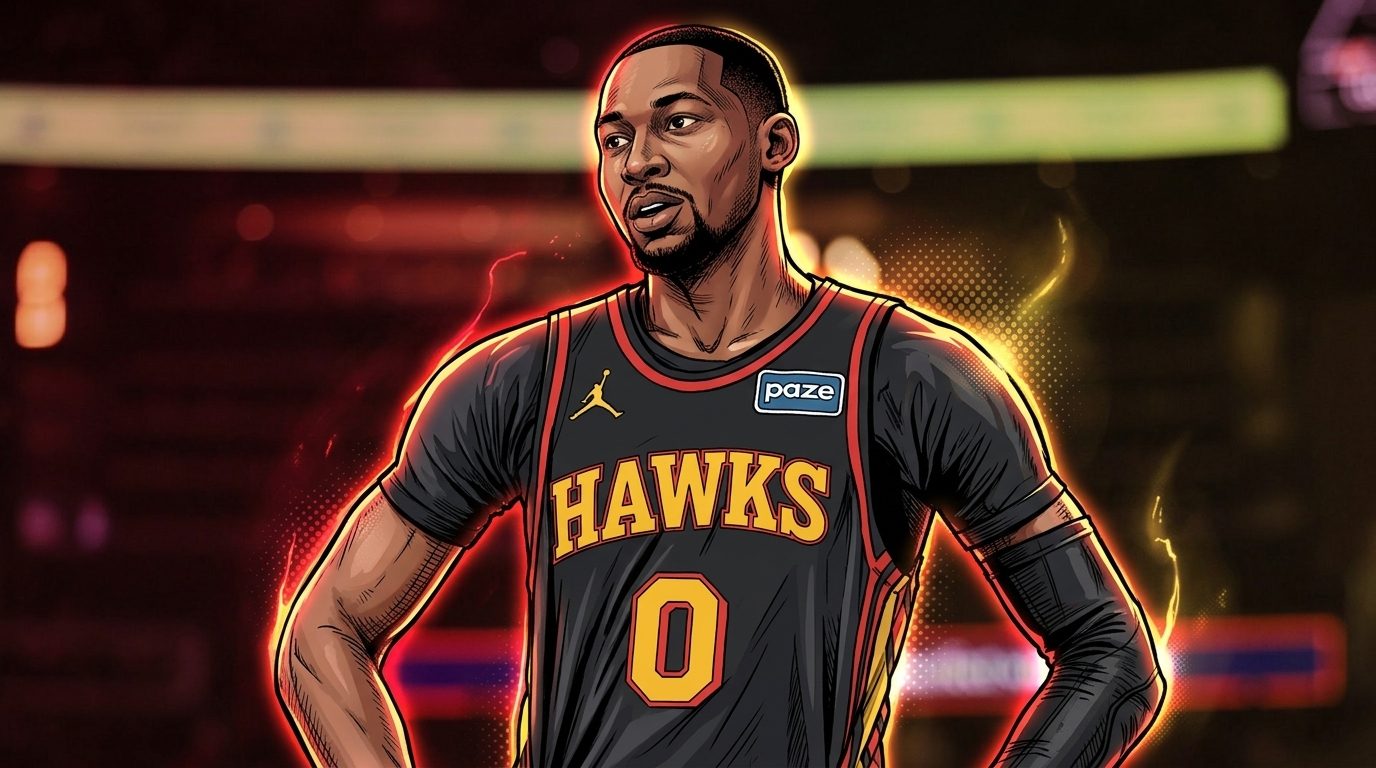

It is August 25th and Jonathan Kuminga still does not have a job.
He turns 24 in October. He has a ring from 2022, five NBA seasons behind him, and a market that has been quietly emptying out around him since the Fourth of July. Atlanta declined his $24.3 million team option for 2026-27, which made him an unrestricted free agent instead of a trade chip, and the expectation was that somebody would come running. The teams that could pay him spent their money. The teams that want him mostly cannot pay him.
Minnesota is one of the last serious bidders still standing. Before anybody gets excited, let’s walk through what it would actually take.
How he got here
Golden State sent Kuminga and Buddy Hield to the Hawks for Kristaps Porzingis on Feb. 6, 2026, ending a standoff dating back to the previous summer’s restricted free agency. He played 20 games as a Warrior and 16 as a Hawk. Across all 36 in 2025-26 he averaged 12.2 points, 5.6 rebounds and 2.3 assists on 46.3 percent shooting and 33.3 percent from three, with recurring left knee inflammation eating the rest of the calendar.
Thirty-six games. That number is doing more damage to his market than any scouting report.
The Atlanta tape is better than the stats suggest. In his stint there he posted a 59.7 true shooting percentage in 21 minutes a night, shot 62.5 percent inside the first nine seconds of the shot clock, and grabbed 18.3 percent of available defensive rebounds against a 13 percent career rate. The Hawks defended at a 104.5 rating with him on the floor. He is a real player in a track meet and a genuine problem in the halfcourt, where he shot 58.5 percent at the rim.
Where he’d play
Naz Reid is in Charlotte. Julius Randle is in Brooklyn. What’s left in the Minnesota frontcourt behind Rudy is Jaden McDaniels and Trey Lyles, which is why the starting power forward job is effectively vacant and why Kuminga’s name keeps finding its way into Wolves conversations in the first place.
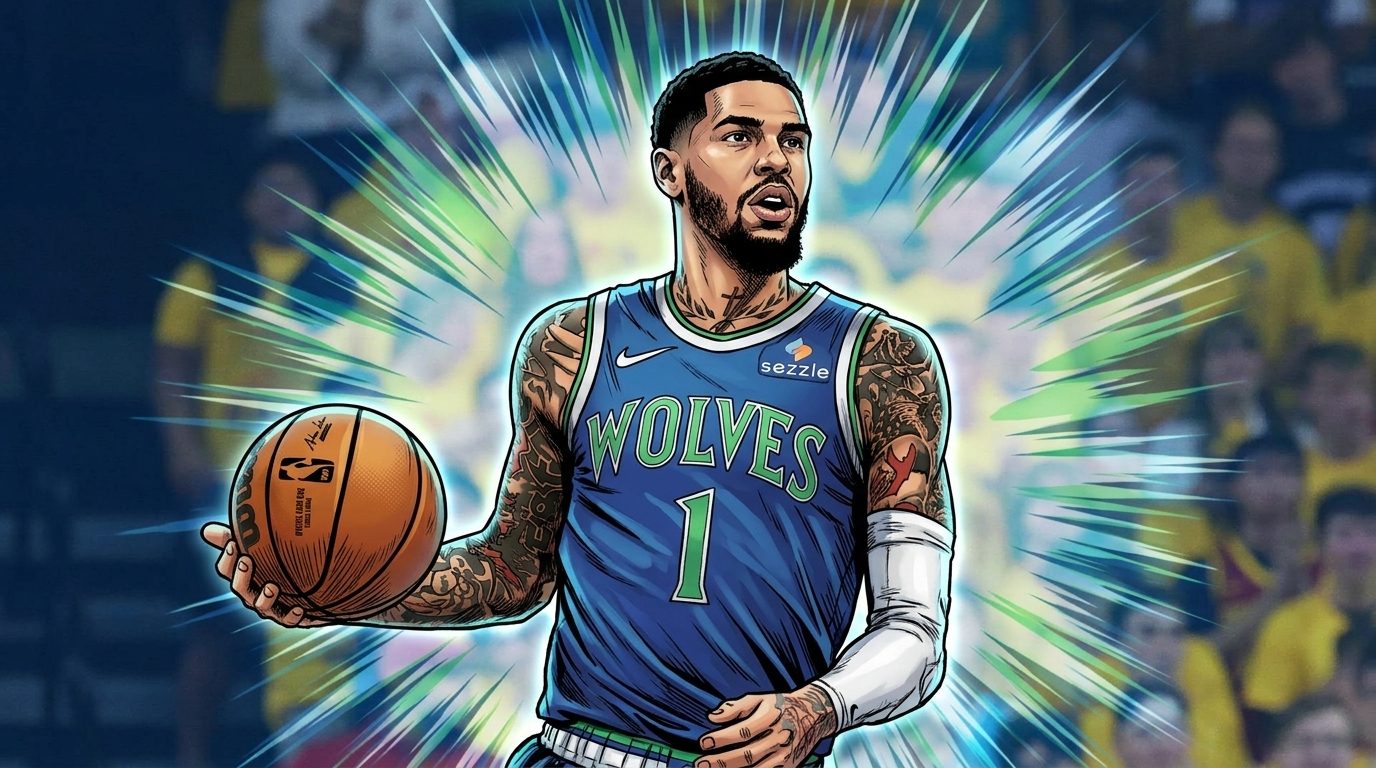
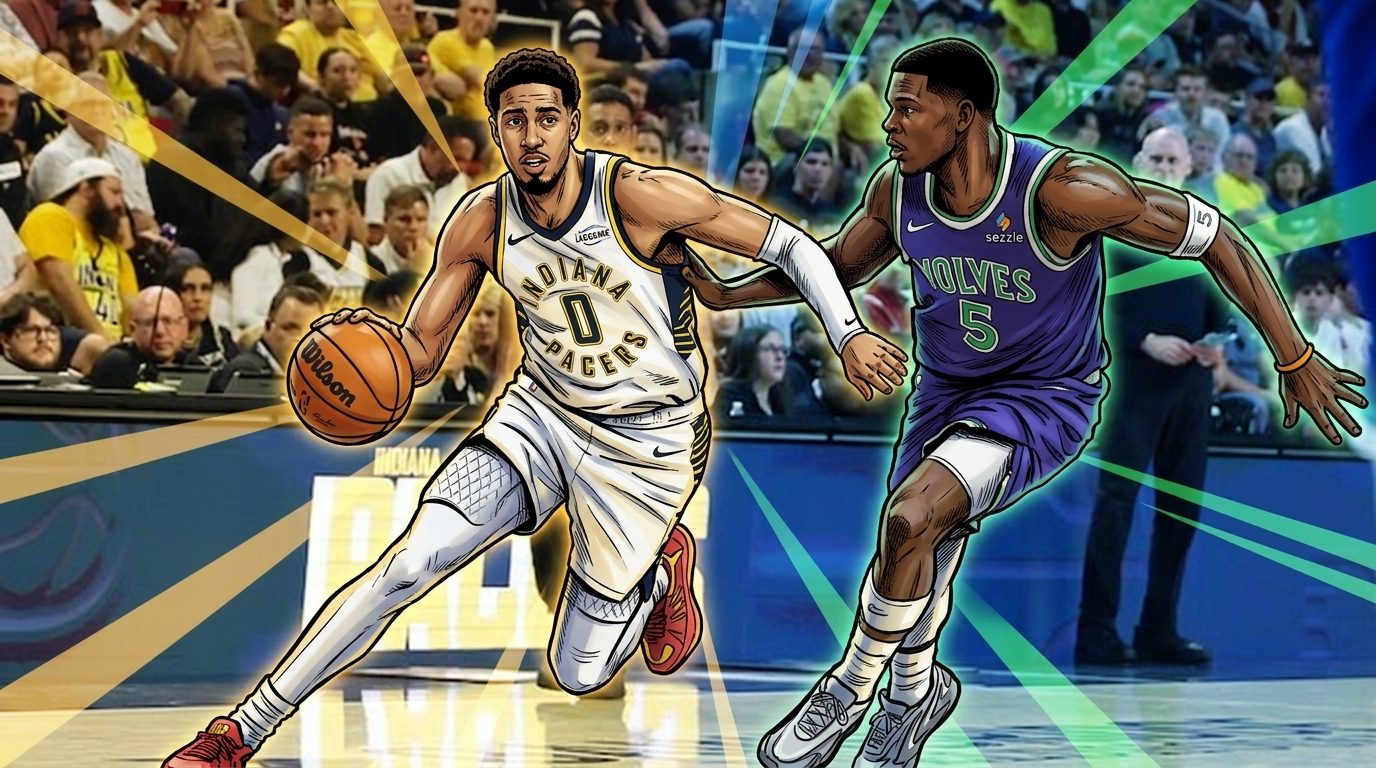
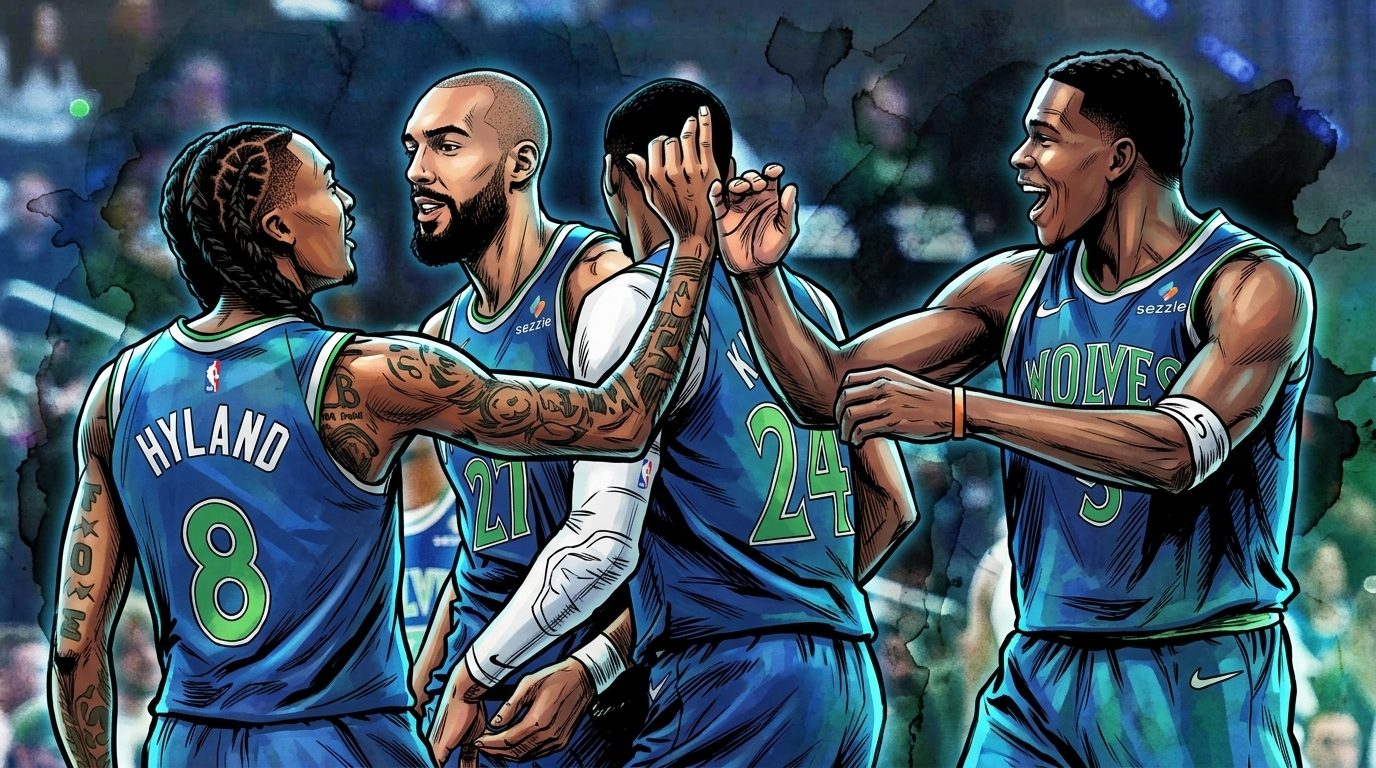
The pitch writes itself. Rudy Gobert erases the rim behind him. McDaniels takes the hardest perimeter assignment so Kuminga never has to. LaMelo Ball and Anthony Edwards do the shot creation, and Chris Finch runs an offense that gets out and goes, which is the exact environment where Kuminga’s numbers thrive.
The part that worries me is the part that worried Golden State for four years. He shot 33.3 percent from three in 2025-26. Putting a non-shooter at the four next to Gobert rebuilds the same crowded paint that had Ant seeing consistent double teams, and Donte DiVincenzo, who tore his Achilles April 25 in Game 4 against Denver, is not walking through that door in October to space it back out.
Kuminga fixes the rim pressure. He does not fix the spacing.
The field
Los Angeles. The Lakers are the favorites, and they got there by being the last team with both a sign-and-trade path and a willingness to start him at the four. They put a two-year offer worth about $20 million in front of him earlier this summer and he said no. Kurt Helin reported he likes the idea of Los Angeles. The fit next to Luka Doncic and Austin Reaves is worse than the fit here, because nobody in that group solves the perimeter defense hole Marcus Smart left when he walked to Houston in July.
Atlanta. They still hold his Bird rights, and declining a $24.3 million option is a verdict on the price, not on the player. A reworked deal around $15 million is available to them and to nobody else at that number.
The money
Here is where the Minnesota conversation stops being fun.
The 2026-27 thresholds are set: a $164.96 million cap, a $200.43 million tax line, a first apron at $209.02 million and a second apron at $221.69 million. After the June 25 four-team trade that brought in LaMelo and Josh Green, Minnesota sits roughly $8.6 million above the first apron and about $3.9 million below the second, hard-capped at the second apron because they aggregated salary to make the deal work.
Michael Scotto reported on July 31 that the Wolves have a $6.06 million taxpayer mid-level exception. They do, on paper. They also have less than $4 million of hard-cap room to spend it in, which is why the reporting has drifted from “mid-level” in July to “veteran minimum”.
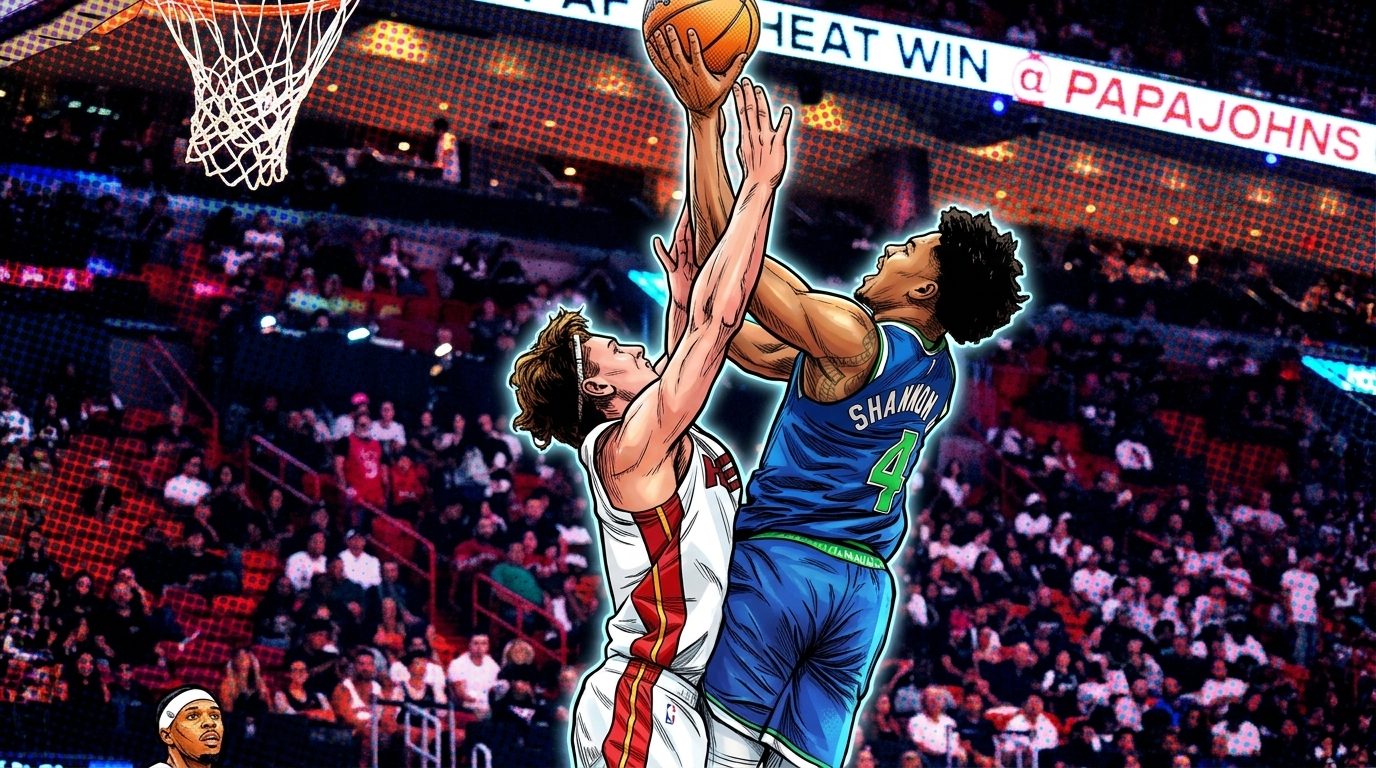
The sign-and-trade is worse. A team acquiring a player that way gets hard-capped at the first apron, and Minnesota is $8.6 million on the wrong side of it. To bring back Kuminga at his reported $20 million target they would have to ship out more than $28 million. Josh Green at $14.7 million plus DiVincenzo at $12.5 million is $27.2 million, which still leaves them over. Throw in Terrence Shannon Jr. and they squeak under with about ten players and roughly a million dollars to fill five spots.
Call that what it is: a hostage note, not a plan.
Rental or keeper
The rules pick the answer for you. Brian Windhorst noted this week that a sign-and-trade has to run three years, and Kuminga has been chasing a shorter bet on himself all summer — so that path is a commitment by definition, and it is the one Minnesota cannot afford without gutting the wing rotation.
https://x.com/SportsWithJay0/status/2090803925423173942
Look at 2027-28 before you wish for it. Green and DiVincenzo’s combined $27.2 million comes off the books, which sounds like relief until you notice LaMelo alone climbs to $43.58 million and Ant, Rudy and Jaden are all still on the ledger. A $21 million power forward eats most of that relief before you’ve signed a backup center.
So the verdict, unhedged: take the one-year minimum or walk away.
If Kuminga wants to bet on himself inside the best defensive infrastructure available to him, on a team where the four-spot is his the day he signs, hand him the pen. That costs Minnesota one roster spot. Every other version costs the rotation.
If it takes Green, DiVincenzo, Shannon and a stretch provision to land a 33 percent shooter on a three-year deal, the Lakers can have him, and we spend this fall finding out whether Trey Lyles is enough.
We’ve been the team that overpays to patch a hole before. It never once fixed the hole.