Kevin McHale
The Boston legend who ran Minnesota basketball for 13 years: he drafted Kevin Garnett, built the lone 2004 conference finalist, and survived the Joe Smith scandal.
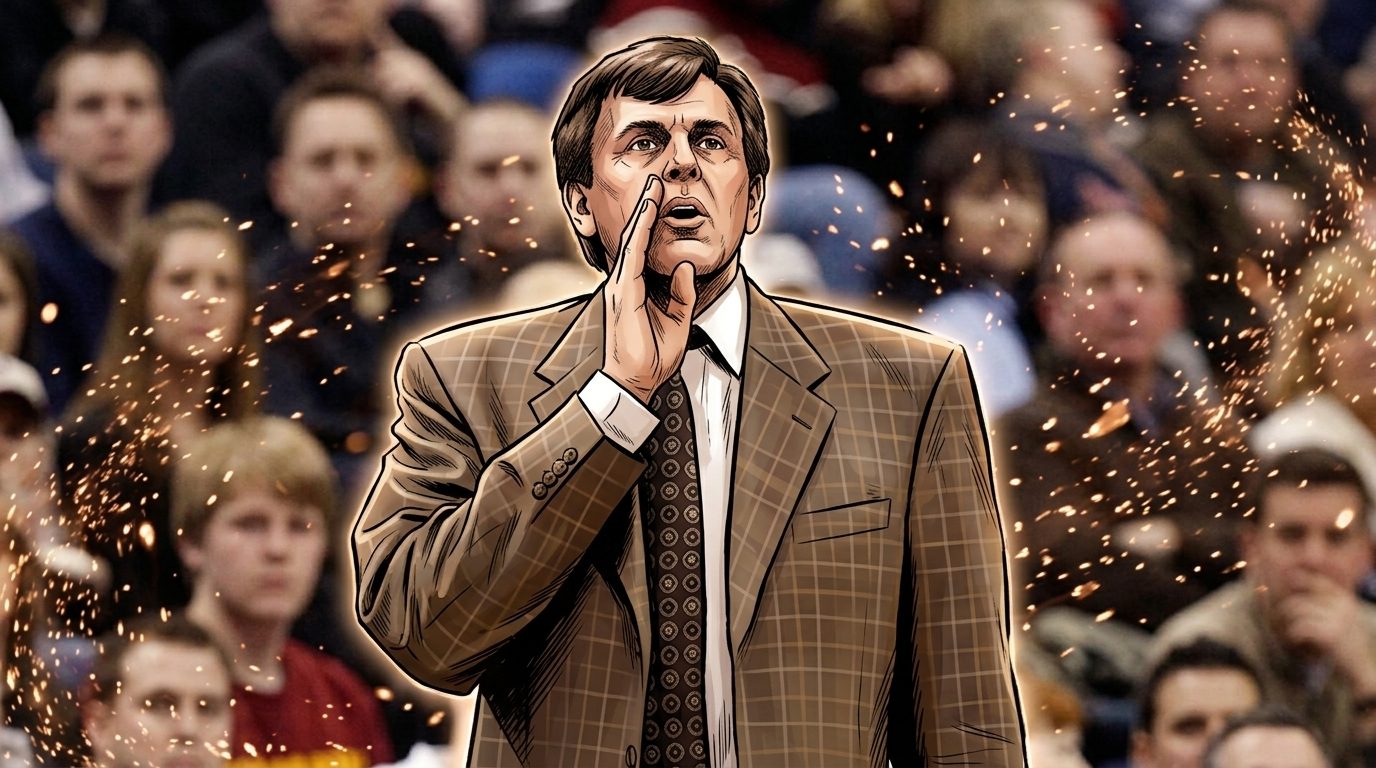
For thirteen seasons the most influential person in the Minnesota Timberwolves organization was a Hall of Fame power forward who had never won a title anywhere but Boston, and never quite figured out how to build one here.
| Vitals | |
|---|---|
| Born | December 19, 1957, Hibbing, Minnesota |
| College | Minnesota (1976–80) |
| Playing career | Boston Celtics, 1980–93 (3× champion, Hall of Fame) |
| Hired | Assistant GM, 1994; VP of Basketball Operations, May 11, 1995 |
| Role | General manager (1995–2008); head coach (2004-05, 2008-09) |
| Departed | June 17, 2009 |
The homecoming. McHale was Minnesota’s own, a Hibbing kid and a Golden Gopher who had gone east to become one of the great low-post scorers the sport has produced. When his knees gave out in 1993 he came home, first as a broadcaster and special assistant, then as assistant general manager in 1994, and finally, on May 11, 1995, as the man running basketball operations for a expansion-era franchise that had never won anything. His first big call was the one that defined everything after it. That June, with the fifth pick, he took a 19-year-old straight out of Farragut Academy in Chicago named Kevin Garnett. The gamble on a high schooler was the best decision the franchise made in its first three decades.
The build. McHale spent the back half of the 1990s trying to wrap a contender around Garnett. In 1996 he acquired Stephon Marbury, flipping the draft rights to Ray Allen to Milwaukee to pair KG with a dynamic young point guard. He added Wally Szczerbiak sixth overall in 1999 and role players like Rasho Nesterovic. The Wolves made the playoffs, but the Marbury partnership curdled fast; by March 1999 Marbury had forced his way out in a three-team deal that returned Terrell Brandon. What followed was the defining frustration of the McHale era: Minnesota reached the postseason eight straight years from 1997 through 2004 and lost in the first round seven times.
The ceiling and the scandal. The reason the roster never grew fast enough around Garnett traces to one of the darkest self-inflicted wounds in league history. Before the 1998-99 season the team struck a secret, illegal side agreement with free agent Joe Smith, a below-market deal now in exchange for a fortune later. When commissioner David Stern uncovered it in 2000, the punishment was brutal: a $3.5 million fine, a voided contract, the loss of five first-round picks (two later returned), and staggered suspensions — owner Glen Taylor barred through August 2001 and McHale placed on unpaid leave through July 2001. A franchise already short on talent had its most valuable roster-building currency confiscated. And yet the crown jewel arrived anyway. In the summer of 2003 McHale acquired Sam Cassell from Milwaukee and Latrell Sprewell in a four-team trade with the Knicks, and the resulting team went 58-24, the best record in franchise history to that point, claimed the Midwest Division, and rode Garnett’s MVP season to the 2004 Western Conference Finals. It stood as the franchise’s only conference finals appearance until Anthony Edwards’ Wolves reached back-to-back Western Conference Finals in 2024 and 2025.
The decline. The 2004 team never got a second act. Cassell’s hip betrayed him in the playoffs, Sprewell publicly soured over a contract that he said had to feed his family, and both were gone within a year. The Wolves cratered. In February 2005 McHale fired coach Flip Saunders and installed himself on the bench for the first time, guiding an interim run of 19-12 that fell short of the playoffs. He tried to reload and never could. On July 31, 2007, with Garnett finally requesting a change, McHale traded the greatest player in franchise history to his old employer, the Boston Celtics, for a five-player package headlined by Al Jefferson plus two first-round picks. Garnett won a title in Boston the next spring. Minnesota bottomed out. McHale’s last shrewd move came at the 2008 draft, when he sent the No. 3 pick, O.J. Mayo, to Memphis in an eight-player swap for the No. 5 selection, Kevin Love, a rebound-machine forward who became the face of the next era.
The exit. In December 2008 McHale took the bench a second time, replacing the fired Randy Wittman on December 8 and coaching the rest of a lost 24-58 season to a 20-43 finish under his own name. He wanted to keep the job. New basketball boss David Kahn had other ideas, and on June 17, 2009, McHale was let go, replaced by Kurt Rambis. Thirteen and a half years after he took the wheel, his run ended with a .500 ledger and a single deep playoff memory.
By the numbers
Head-coaching record with the Timberwolves, per Basketball-Reference:
| Season | Stint | W | L | Result |
|---|---|---|---|---|
| 2004-05 | Interim (from Feb. 12) | 19 | 12 | Missed playoffs (team 44–38) |
| 2008-09 | From Dec. 8 | 20 | 43 | Missed playoffs (team 24–58) |
Wolves coaching totals
94Games 39Wins 55Losses .415Win pct. 0Playoff trips
Franchise ranks- 1st Longest tenure of any Wolves basketball-ops chief (1995–2008)
- 1st Only executive to build a conference finalist before 2024
- 527–526 Regular-season record as general manager
- 17–30 Playoff record as general manager
Per Basketball-Reference’s executive record.
Accolades- Drafted Kevin Garnett, No. 5 overall, 1995
- Built the 2003-04 franchise-record 58-win team (Midwest Division title, Western Conference Finals)
- Acquired Sam Cassell and Latrell Sprewell, 2003
- Acquired Kevin Love on draft night, 2008
- Drafted Wally Szczerbiak, No. 6 overall, 1999
Lore
The kid from Farragut. In 1995 nobody drafted teenagers out of high school with a top-five pick. McHale, who had scouted Garnett in person and come away convinced, did it anyway, and the pick reshaped how the entire league thought about drafting talent. Every prep-to-pro star who followed owes a small debt to a Minnesota GM who trusted his eyes over the conventional wisdom.
The handshake that cost five picks. The Joe Smith affair is still taught as the cautionary tale of NBA cap circumvention. A wink-and-a-promise deal meant to keep a good rotation player cheap turned into the harshest league punishment ever levied on a front office, and it kneecapped the franchise’s ability to surround Garnett during his prime years. The bill came due long after the handshake.
One glorious spring. For a few weeks in 2004, Minnesota was the center of the basketball universe. Garnett was the MVP, Cassell was an All-Star cracking jokes and draining daggers, Sprewell was reborn, and the Wolves won two playoff series in a single postseason for the only time in franchise history. Cassell’s hip gave out against the Lakers and the run died in six games. The window never reopened on McHale’s watch.
Trading a legend back home. Sending Garnett to Boston in 2007 was the hardest transaction of McHale’s career and, in hindsight, an oddly fitting one: the Celtics great shipped the Wolves’ own franchise player to the only building where McHale had ever hung a banner. Garnett won his ring in green the very next June, a bittersweet coda no Minnesota fan has fully filed away.
The coach nobody asked for. Twice McHale traded the GM’s chair for the head coach’s clipboard, and both times it was a franchise in crisis reaching for a familiar hand rather than a plan. He was, by the accounts of players who liked him, a warm and funny presence in the room. The results, 39-55 and no playoff games, told the same story as the rest of the tenure.
He drafted a top-25 player in league history and left with a .500 record to show for it, which is the whole McHale paradox in one line.