Julius Randle
The centerpiece of the Karl-Anthony Towns trade, Julius Randle rewrote his playoff reputation on a 2025 conference finals run before his two-year Minnesota stay ended.
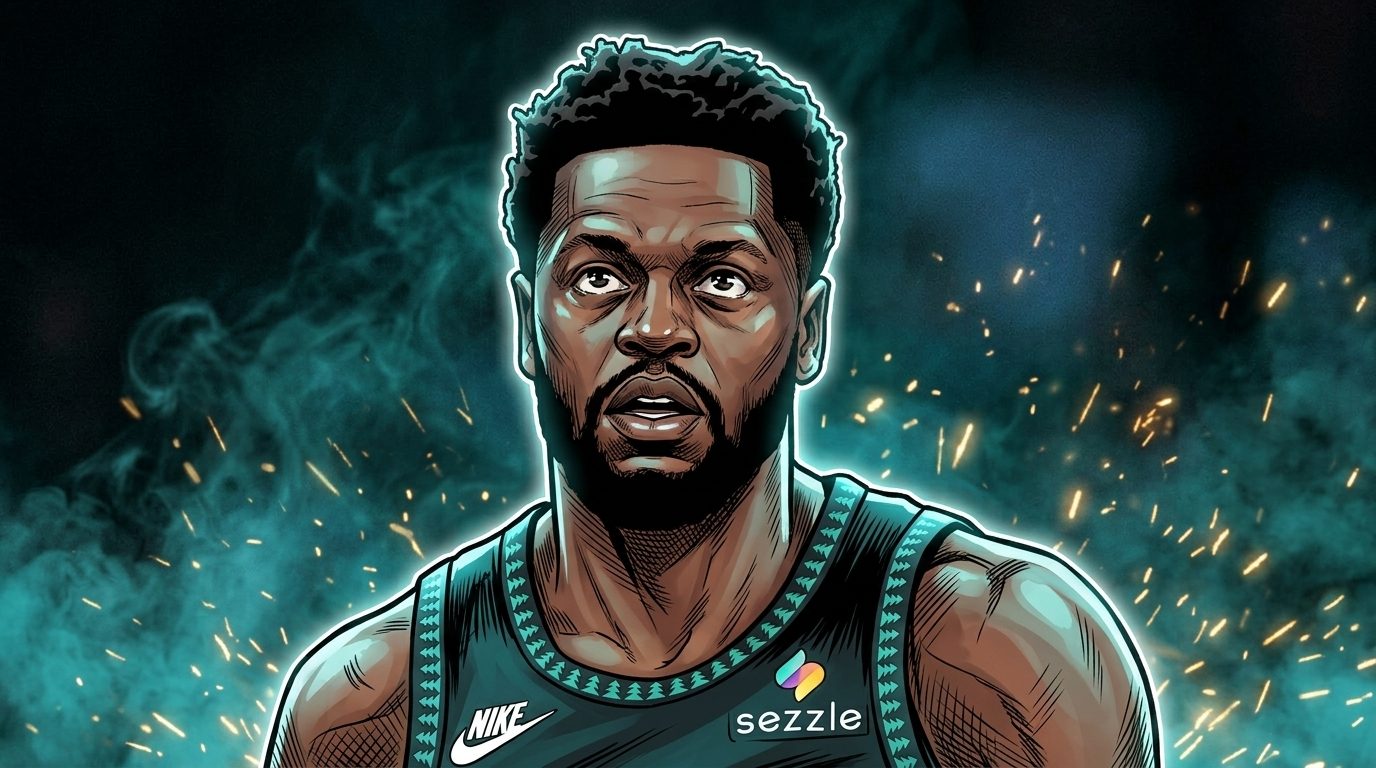
Minnesota shipped out the most gifted offensive big man in franchise history and, for one improbable spring, hardly felt the loss.
| Vitals | |
|---|---|
| Born | November 29, 1994, Dallas, Texas |
| College | Kentucky (one season) |
| Drafted | No. 7 overall, 2014 (Los Angeles Lakers) |
| Acquired | October 2024, in the Karl-Anthony Towns trade |
| Seasons as a Wolf | 2 (2024–2026) |
| Number | 30 |
The arrival. In October 2024 the Timberwolves did the previously unthinkable and traded Karl-Anthony Towns, the most accomplished scoring big the franchise had ever developed, to the New York Knicks. The headline piece coming back was Julius Randle, a three-time All-Star whose reputation arrived heavier than his contract: a bruising, ball-dominant forward whose gaudy regular-season lines had a long history of shrinking once the calendar turned to spring. Donte DiVincenzo and Keita Bates-Diop came with him, along with a protected 2025 first-round pick from the deal. A meaningful slice of Wolves Nation filed Randle under salary ballast, the cost of moving a max contract, rather than a genuine building block. He would spend two years proving the filing wrong, then briefly right, then wrong again.
The year it clicked. The fit was clumsy early. A roster built around Anthony Edwards, Rudy Gobert and a new lead ball-handler took months to find its spacing, and Randle’s touches and turnovers were a nightly talk-radio topic through the winter. Then, down the stretch, Chris Finch leaned into Randle as a point-forward, and the offense reorganized itself around his passing rather than fighting it. He finished 2024-25 at 18.7 points, 7.1 rebounds and 4.7 assists across 69 games, but the numbers that mattered came in the postseason. Randle got past the Lakers, then authored a second-round dismantling of Golden State that included a Game 3 triple-double (24 points, 10 rebounds, 12 assists), a playoff career-high 31 in Game 4, and 29 on 13-of-18 shooting in the Game 5 closeout, roughly 25-7-7 for the series. He dragged Minnesota to the Western Conference Finals for the second straight year before Oklahoma City closed the door in five. His 21.7 points a night over 15 games buried the “can’t do it in the playoffs” tag that had followed him for a decade.
The regression. The front office was convinced, re-signing him in June 2025 on a deal reported around three years and $100 million, and the 2025-26 season offered a fuller version of the good: 21.1 points, 6.7 rebounds, a team-leading 5.0 assists, and a 49-win team that dispatched Denver in the first round. The flashes of the playoff hero were real. So was the old ghost. Against San Antonio in the second round the shooting cratered to 16.0 points a game on 39 percent, and the season ended in a Game 6 blowout, 139-109 on May 15, in which Randle managed three points. The revelation of one May had become a passenger the next.
The exit. On July 10, 2026, Randle was moved again, headed to the Brooklyn Nets in the four-team blockbuster that brought LaMelo Ball to Minnesota and sent Naz Reid to Charlotte. His contract, like Reid’s, traveled with him. Two years, one dazzling spring, and out the door in the deal that reshaped the roster around Edwards once more.
By the numbers
Regular-season stats, per Basketball-Reference:
| Season | GP | PPG | RPG | APG | FG% | 3P% |
|---|---|---|---|---|---|---|
| 2024-25 | 69 | 18.7 | 7.1 | 4.7 | .485 | .344 |
| 2025-26 | 79 | 21.1 | 6.7 | 5.0 | .481 | .315 |
Wolves career totals
Franchise ranks
- 4th Playoff assists (108)
- 5th Playoff points (518)
- 6th Points per game (20.0)
- 7th Playoff rebounds (178)
- 26th Points (2,955)
Per the Timberwolves all-time player rankings — a two-season run that lands him near the top of the franchise's postseason ledger despite the short stay.
Accolades
- Western Conference Finals, 2025 (with Minnesota)
- 3× NBA All-Star (2021, 2023, 2024 — all with New York)
- All-NBA Second Team, 2021
- NBA Most Improved Player, 2021
Lore
The playoff question, answered. For ten years the book on Randle was that the regular-season production was a mirage that vanished under postseason pressure. In the spring of 2025 he closed that book in a Minnesota uniform, and the manner mattered as much as the math: he was the offensive fulcrum against the Warriors, the steadiest hand in the building, the reason a team that had traded away KAT still felt whole. Wolves fans who had spent October grumbling about the return spent May chanting for the guy who came back in it.
Kyden at the podium. The best recurring image of the Randle era had nothing to do with basketball. His young son Kyden became a fixture of the postgame scene, wandering onto the court after wins and occasionally commandeering the interview podium, and the joy the two of them shared was the thing everyone remembered even on the nights the offense sputtered. In a fanbase conditioned to brace for disappointment, a kid hyping up his dad in front of a microphone was pure, uncomplicated delight.
139 to 109. The other bookend is harder to watch. Randle’s second Minnesota postseason ended in a 30-point wipeout in San Antonio, Game 6, with the star of the previous spring reduced to three quiet points. It was the version of the playoffs his critics always warned about, arriving exactly one year after he had made them look foolish, and it sits in the record as the reminder that the 2025 run was real but never guaranteed to repeat.
The rental that mattered. Minnesota re-signed him in the summer of 2025 and traded him a year later, so the whole tenure fits inside 24 months. Yet those two seasons carried a conference finals trip, back-to-back playoff series wins, and a genuine reinvention of a career narrative.
Long after the stat lines blur, the picture that lasts is Kyden commandeering the podium, a kid hyping up his dad. It was the warmest thing to come out of a two-year stay in Minnesota.